Cat and Dog Silhouettes
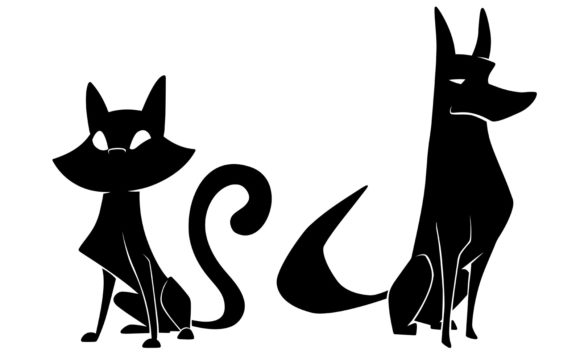
As someone who’s stitched hundreds of pet-themed designs for Etsy shops, boutique baby lines, and custom apparel clients, I opened Cat and Dog Silhouettes expecting charm—and got clarity. This isn’t a busy illustration crammed with whiskers or paw prints. It’s two clean, full-length black silhouettes—cat seated upright, dog sitting calmly beside it—anchored against generous white space. The mood is quiet, affectionate, and timeless: less “cartoon pet” and more “quiet companion.” That simplicity is its greatest strength—and its first real test in embroidery.
What It Feels Like to Stitch (Before You Even Thread the Needle)
The AI and CDR files tell me this was built for precision—not just vector scalability, but intentional negative space and balanced mass. Both silhouettes have smooth, unbroken outlines with no internal cutlines or layered elements. That means Cat and Dog Silhouettes translates cleanly into a single-layer machine embroidery design: no tricky applique setup, no satin-stitch borders fighting fill-stitch density. For a custom embroidered tote bag I recently made for a local pet rescue, this kind of clean shape held up beautifully at 4.5 inches wide—even on medium-weight canvas with light tear-away stabilizer. No puckering. No thread breaks. Just confident, readable shapes that customers immediately recognized as “cat + dog,” not “abstract blobs.”
Where It Shines (and Where It Asks for Thought)
Cat and Dog Silhouettes excels in projects where emotional resonance matters more than intricate detail: baby onesies (gentle, non-distracting), linen pillow covers (elegant and gender-neutral), kitchen tea towels (clean, wash-friendly), and unisex sweatshirt fronts (subtle but meaningful). It also works surprisingly well as an embroidered patch—especially when heat-sealed onto denim jackets or backpacks—because the solid black mass reads clearly from across a room.
But let’s be real: silhouette-based embroidery lives or dies by context. On thin or stretchy fabric—like lightweight cotton jersey for toddler tees—this design needs extra stabilization. I tested it on a ribbed knit cap, and while the outline stayed crisp, the lower curve of the dog’s silhouette softened slightly without cutaway backing. On dark fabric? It demands high-contrast thread (true black or deep charcoal) and careful stitch density review—too dense, and it’ll feel stiff; too sparse, and the shape loses definition.
It’s not ideal for tiny hoop sizes under 3 inches unless scaled thoughtfully. At 2.2 inches tall, the cat’s ear tip and the dog’s tail end risk becoming ambiguous stitches rather than intentional features. And on heavily textured fabrics—burlap, thick terry cloth, or quilted blankets—the silhouette’s clean edge can blur. Always test on scrap first, especially if you’re planning holiday embroidery for handmade ornaments or personalized gifts where presentation is everything.
How It Shapes Your Finished Product—and Your Customer’s Reaction
This design doesn’t shout. It invites. When used on a nursery wall hanging or a monogrammed baby blanket, Cat and Dog Silhouettes feels intentional, not generic. Customers notice that. I’ve had repeat buyers specifically ask for “that quiet pet pair” because it matched their home aesthetic—no cutesy fonts, no glitter, no visual noise. That builds trust: your handmade product feels curated, not mass-produced.
For Etsy sellers and small shop owners, that subtlety pays off in listings. Paired with a clean printable mockup—say, on an oatmeal-colored apron or a natural linen tote—the design communicates warmth and craftsmanship without over-explaining. It supports brand consistency across collections: imagine using the same silhouette on a set of pet memorial cards, embroidered patches for foster volunteers, and matching kitchen towels for a pet-friendly café pop-up.
Practical Notes Every Embroidery Designer Should Check
- Test before committing: Run a sample on your exact fabric + stabilizer combo—especially for baby embroidery or commercial embroidery where durability matters.
- Thread color isn’t optional: Since the original is pure black-on-white, choose thread that matches your base fabric’s tone. Cream thread on ecru linen? Yes. Neon pink on black cotton? Only if that’s your brand voice—and even then, preview it in grayscale mockups first.
- Review stitch density: Silhouettes can easily become overly dense. If your digitized version uses heavy fill stitch, lighten it—especially for wearable items like sweatshirts or caps.
- Hoop size matters: Measure the widest point of your intended layout. The original vector gives you flexibility, but don’t force it into a 3x3 hoop without checking corner clearance.
- Inspect fine edges: Zoom in on the cat’s ear and dog’s tail in your embroidery software. Are they sharp enough to stitch cleanly—or do they need slight vector smoothing?
- Confirm licensing: As a Graphics asset in the Illustrations category, Cat and Dog Silhouettes may carry usage limits. If you plan to sell finished products or bundle it into digital embroidery files, verify commercial rights before listing.
Final Thought: Simplicity With Substance
In a market flooded with hyper-detailed, trend-chasing pet embroidery files, Cat and Dog Silhouettes stands out by doing less—and meaning more. It’s not flashy. It won’t dominate a social media feed at first glance. But it earns attention the way good design should: quietly, consistently, and with intention. Whether you’re stitching a one-of-a-kind personalized gift or building a cohesive line of small shop products, this design supports your craft—not the other way around. It leaves room for your voice, your fabric choices, your thread palette, and your customer’s story. And in embroidery, that space is where authenticity lives.