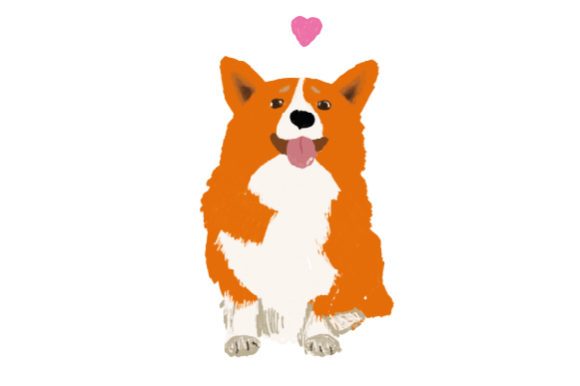
Floating Dog Watercolor
A Designer’s First Glance: Light, Lyrical, and Just Right for Handmade Warmth
When Floating Dog Watercolor opened on my screen—clean SVG first, then the transparent PNG—I felt that quiet click of recognition: this isn’t a busy clipart dog or a stiff vector mascot. It’s soft-edged, breathy, with watercolor washes suggesting movement and tenderness. The dog appears mid-drift, paws relaxed, ears gently blurred at the tips, as if caught in a sunlit memory. There’s no outline, no hard contour—just layered transparency and subtle gradients. That tells me immediately: this is not a design for dense fill-stitch realism. It’s built for suggestion, mood, and handmade charm.
Where It Lives Best: Real Projects, Real Customers
Last week, I prepped a custom order for a local boutique: embroidered linen tea towels for a spring launch. They wanted something gentle but distinctive—not floral, not abstract, but *alive*. I pulled up Floating Dog Watercolor, resized it to 3.8” wide, and mocked it on oat-colored towel fabric. Instantly, it clicked. The watercolor softness softened the formality of the linen; the floating pose gave motion without clutter. Customers browsing the shop didn’t stop to decode anatomy—they smiled. That’s the quiet power of this design: it communicates feeling before detail.
It’s equally strong on baby embroidery—think organic cotton onesies or muslin swaddle blankets—where sharp lines feel too clinical, and delicate watercolor tones echo nursery palettes. On a heavyweight unisex sweatshirt? Yes—but only as a single chest piece, not a full back layout. Its strength lies in restraint: one quiet focal point, not visual noise. As an embroidered patch? Less ideal—it lacks crisp outer edges for clean cut-and-sew, and satin-stitch borders would fight its fluid identity. Save patches for bolder, more defined animal designs.
What Works—and Where to Pause
Floating Dog Watercolor shines on stable, medium-weight fabrics: canvas tote bags, brushed cotton aprons, midweight pillow covers, and structured caps (front panel only). Its open composition handles slight fabric texture well—think slubbed linen or looped terry—because the “imperfections” in the watercolor effect harmonize with natural fiber variation.
But tread thoughtfully on stretchy knits (like jersey tees), ultra-thin fabrics (voile, silk charmeuse), or heavily textured surfaces (bouclé, thick corduroy). Without clear stitch boundaries, fine details can blur or vanish under tension or pile. On dark fabric? Test thread colors carefully—the design relies on tonal contrast, not stark black-on-white. A charcoal grey thread on navy may disappear; a warm taupe or dusty rose will hold shape and warmth.
Also note: its light density makes it kinder on stabilizer use—less bulk, less risk of stiffness—but don’t skip stabilizer entirely. Even lightweight tear-away helps prevent puckering on smooth cottons. And avoid curved surfaces like crown brims or deep pillow gussets unless you’ve tested hooping and pull compensation first. This design doesn’t forgive distortion.
Design Integrity Meets Customer Trust
When your Etsy buyer orders a personalized gift—a custom embroidered kitchen towel with their rescue dog’s name stitched beneath Floating Dog Watercolor—they’re not just buying thread and fabric. They’re buying emotional resonance. This design delivers that because it feels intentional, not algorithmic. Its handmade aesthetic signals care—not perfection, but presence. That builds trust faster than any polished vector ever could.
For craft businesses, that translates directly to perceived value. A $38 linen towel with Floating Dog Watercolor reads as curated, thoughtful, and quietly premium—even before you add hand-stitched initials or a branded hang tag. It supports brand consistency for makers who lean into softness, nature, and mindful making—not loud graphics or trend-chasing.
Practical Notes Every Embroidery Designer Should Run Through
- Always test on scrap fabric first—especially with your exact thread palette and stabilizer combo. Watercolor tones shift dramatically across thread brands.
- Review stitch density in your embroidery software. While the file likely uses lighter fill and running-stitch accents, confirm there are no unintentionally dense zones that’ll cause fabric distortion or thread breakage.
- Check hoop size compatibility. This design scales gracefully, but avoid pushing below 2.5” without verifying small details (like ear wisps or paw hints) remain legible post-stitch.
- Inspect corners and negative space. Does the float extend cleanly into margins? Will it need a subtle border or background fill for certain applications (e.g., standalone iron-on appliqué)?
- Mock it in black and white. If the grayscale version loses all definition, contrast adjustments or alternate thread choices are needed.
- Confirm licensing terms before selling finished products or digital bundles. Since Floating Dog Watercolor includes SVG, PNG, EPS, and DXF files, verify whether commercial use is granted for both physical goods and resale of the digital embroidery file itself.
- Use proper stabilizer for your base fabric—lightweight cut-away for knits, tear-away for stable wovens, and optional topping for napped fabrics.
Final Thought: Not Just a Design—A Quiet Invitation
Floating Dog Watercolor doesn’t shout. It doesn’t need to. In a market saturated with bold, scalable, machine-perfect animal motifs, this design offers something rarer: breathing room. It invites the maker to slow down, choose thoughtful thread colors, pair it with natural fibers, and build something that feels human-made—not mass-produced. Whether you’re stitching a holiday gift for a fellow dog lover, launching a small shop line of nursery linens, or creating custom apparel for a local pet wellness brand, Floating Dog Watercolor holds space for authenticity. It’s not the loudest design in your library—but it might be the one your customers remember longest.