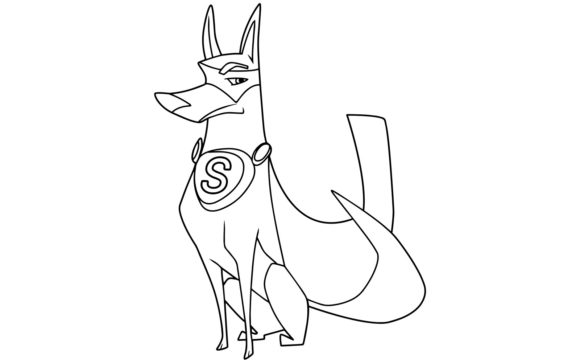
Super Dog Sitting Line Art
A Designer’s First Look: Clean, Playful, and Ready for Stitching
When I opened the Super Dog Sitting Line Art vector file, my first thought wasn’t “cute” — it was “workable.” That’s rare. So many dog-themed illustrations lean into cluttered details or forced whimsy, but this one breathes. A full-length silhouette of a strong, grounded dog in a superhero cape and mask — no shading, no gradients, just confident, continuous line work against crisp white space. It feels athletic, kind, and quietly heroic. Not cartoonish. Not saccharine. Just a well-proportioned, balanced shape that invites stitching rather than resisting it.
Where This Design Truly Shines (and Why)
I recently sketched out a custom embroidered tote bag for a local pet rescue’s fundraising pop-up — sturdy canvas, natural beige, meant to hold dog toys, leashes, and handwritten thank-you notes. Super Dog Sitting Line Art landed perfectly there. Its clean outline translates beautifully into a bold running stitch or satin-stitched border on medium-weight fabric. No tiny interior details to vanish in thread, no fragile limbs that’d blur at 8–10 inches wide. It scaled cleanly from a 4-inch patch on a denim apron to a 9-inch chest piece on an organic cotton sweatshirt — all without losing legibility or charm.
It’s also a quiet standout for baby embroidery. Think: a soft ivory muslin blanket, stitched in pale grey or oatmeal thread. The simplicity reads as gentle, not juvenile — and the superhero motif adds warmth without cliché. For Etsy sellers, that nuance matters. Customers scroll past generic paw prints; they pause for something with personality *and* precision.
Real-World Embroidery Considerations
That said, Super Dog Sitting Line Art isn’t magic — it’s a tool. And like any tool, its success depends on how you wield it.
- Hoop size & fabric texture: Because it’s full-length and linear, it needs breathing room. On a curved surface like a cap, avoid placing the full figure across the front crown — the cape’s flow distorts over seams. Better as a side-embroidered accent or centered on a flat panel like a tote base or pillow cover.
- Dark fabric? Test contrast early. The line art relies on clear silhouette definition. On navy or charcoal, use bright white, metallic silver, or deep cobalt thread — not ecru or light grey. Always run a black-and-white mockup first.
- Stretchy or thin fabrics: This design works best with stable substrates — twill, canvas, midweight cotton, felt-backed denim. On jersey or baby knit, stabilize aggressively (cutaway + tear-away combo), and consider simplifying the cape’s outer edge if stitch density feels too aggressive.
- Washability & wear: Since it’s line-based (not dense fill), it holds up well on items like kitchen towels or kids’ tea towels — minimal thread bulk means less pilling and faster drying. Just avoid tight satin-stitch corners where friction builds.
What It Adds to Your Finished Product
Embroidery isn’t just decoration — it’s tactile storytelling. Super Dog Sitting Line Art elevates handmade product perception because it feels intentional, not clip-art. When stitched cleanly, it signals care: in proportion, in placement, in thread choice. That builds customer trust — especially for personalized gifts (think: “Baxter, Hero of the Backyard” embroidered beside the dog’s name on a holiday stocking). It also supports brand consistency for small shops: pair it with a simple sans-serif font for tags, packaging, or digital mockups, and you’ve got cohesive design assets without licensing headaches.
For craft fair vendors, it’s gift-ready. Buyers respond to clarity and charm — and this design delivers both without needing explanation. No decoding required. Just instant recognition, warmth, and a subtle wink of fun.
Practical Notes Every Embroidery Designer Should Check
- Test stitch on scrap fabric *first* — especially if using textured weaves or blends.
- Review stitch density in your embroidery software. If converting from the AI vector, ensure no unintentional fills or overlapping paths creep in during digitizing.
- Confirm hoop compatibility. At full scale, this design likely needs at least a 5×7 hoop — smaller hoops may require thoughtful cropping (e.g., just the dog’s head + mask for a cap front).
- Inspect fine points: the tip of the cape, the curve of the mask strap, the toe of the front paw. These are potential snag zones — adjust underlay or reduce density if needed.
- Try it in monochrome mockups. Does it read clearly at thumbnail size? That matters for Etsy listings and social previews.
- Use appropriate stabilizer — medium cutaway for knits, tear-away for stable wovens. Don’t skip it.
- Verify licensing terms before selling finished items or bundling the design into digital products. As an Illustrations asset, it’s likely intended for commercial embroidery use — but always confirm.
Final Thought: A Design That Serves the Maker
Super Dog Sitting Line Art doesn’t shout. It stands. It’s the kind of machine embroidery design that disappears into the product — not as filler, but as quiet confidence. Whether you’re stitching a limited-run batch of sweatshirts for a rescue fundraiser, prepping custom patches for a dog-walking co-op, or building a cohesive line of nursery decor, this graphic supports your craft instead of competing with it. It leaves room for your voice — your thread choices, your fabric pairings, your brand’s warmth — while holding its own as strong, healthy, and unmistakably kind. That’s not easy to find. And that’s why, after three real projects and two client revisions, I keep coming back to it.